Memphis residential architecture creates unique harborage zones that attract synanthropic arachnids. In older brick veneer structures throughout Midtown, Central Gardens, and Cooper-Young, open weep holes and settle…
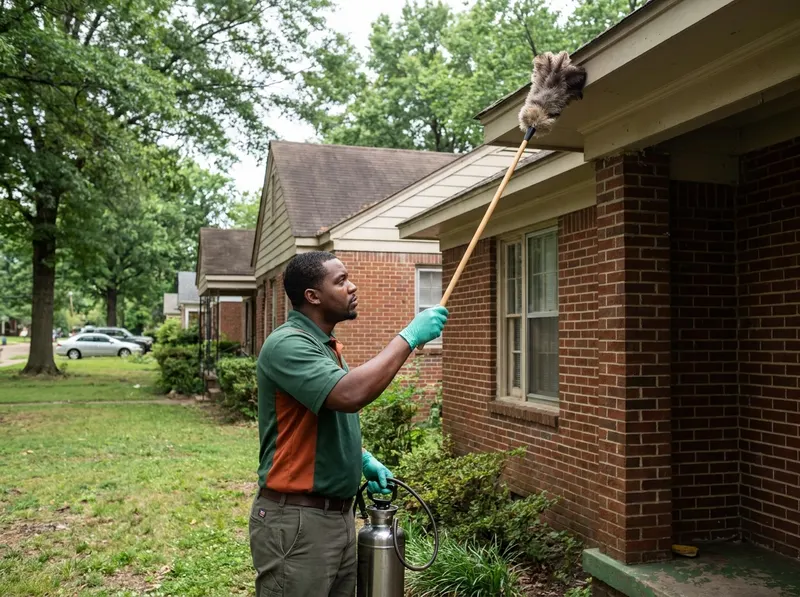
Memphis residential architecture creates unique harborage zones that attract synanthropic arachnids. In older brick veneer structures throughout Midtown, Central Gardens, and Cooper-Young, open weep holes and settle gaps in stone foundations grant ground-hunting arachnids direct passage behind drywall. The humid subtropical environment along the Mississippi River alluvial plain accelerates insect populations, supplying an abundant prey matrix of silverfish, moths, and crickets. ForestQuill Exterminators approaches spider control as an ecological equation: eliminating secondary insect populations removes the primary food reservoir, causing predatory arachnids to abandon the envelope.
Structural protocols distinguish between web-building species and wandering hunters. The brown recluse (Loxosceles reclusa) establishes unorganized retro-structural retreats inside cedar shake siding, cardboard storage, and fiberglass insulation batts rather than geometric aerial webs. Standard airborne pyrethrin foggers disperse these arachnids deeper into ceiling plenums. Professional intervention relies on micro-crystallized dust applications inside void chambers, documented according to EPA pesticide regulations, paired with mechanical exclusion. Installing 20-mesh copper mesh inside weep vents prevents mechanical reentry while preserving required wall drainage.
Properties in wooded or water-adjacent pockets such as East Memphis, Cordova, and Southwind encounter pronounced seasonal migrations of wolf spiders and fishing spiders during late summer drought shifts. In slab-on-grade developments across Binghampton, Berclair, and Hickory Hill, foundational expansion joints provide horizontal pathways beneath hardwood and carpet tack strips. Our technicians establish continuous chemical barriers using low-odor microencapsulated suspensions alongside non-chemical modifications, including crawlspace vapor barrier sealing guided by HUD housing standards to mitigate high relative humidity.
Operational steps follow a precise sequence: 1. Full-perimeter interior and sub-floor structural analysis. 2. Vacuum extraction of visible specimens and silken egg sacs using HEPA filtration units compliant with NIOSH safety guidelines. 3. Void injection of mineral desiccant dusts in unconditioned spaces. 4. Exterior liquid band application extending 3 feet up the exterior masonry and 5 feet outward over the soil apron. 5. Placement of high-tack monitoring stations along baseboards to verify population decline. Treatment integrity aligns with building envelope recommendations outlined by the DOE Building Technologies Office to maintain crawlspace thermal safety.
Every job gets a firm, written price after a free on-site visit.
Tell us about your spider management job in Memphis and we'll send a clear, written quote, usually the same day.
 ForestQuill Exterminators