Physical exclusion acts as the primary defense line against urban rodents, establishing a permanent barrier rather than relying on perimeter poison boxes that leave carcasses inside wall voids. In older residential…
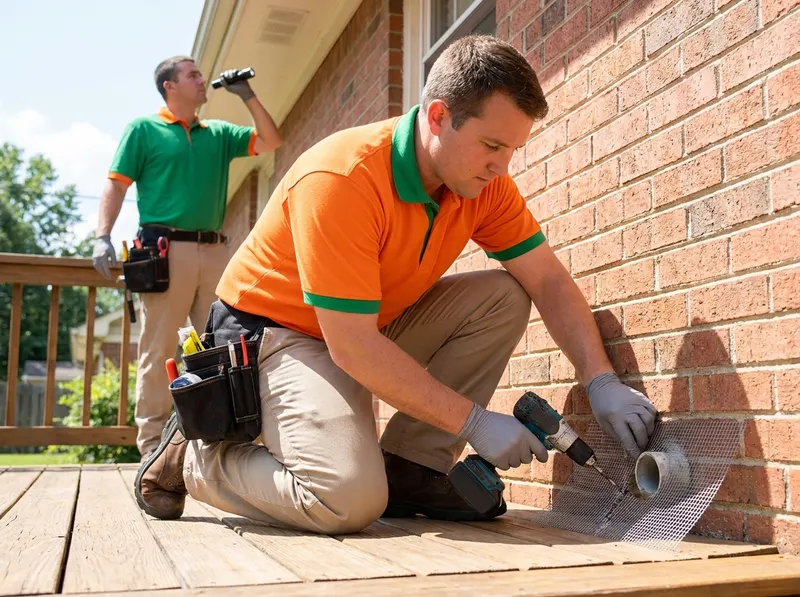
Physical exclusion acts as the primary defense line against urban rodents, establishing a permanent barrier rather than relying on perimeter poison boxes that leave carcasses inside wall voids. In older residential architecture across Midtown and Central Gardens, raised continuous brick-and-mortar foundations frequently develop gaps around historic crawlspace access doors and subfloor sill plates. Field standards documented by the Centers for Disease Control and Prevention require closing every structural opening measuring 0.25 inches or larger, because an adult house mouse requires only 6 millimeters of clearance to compress its ribcage and enter a structure. Sealing these entry thresholds utilizes 19-gauge galvanized welded University of Tennessee Extension recommended hardware cloth paired with elastomeric masonry sealants that resist gnawing teeth. Crawlspace vents in aging historic homes receive bespoke internal wire screens, preventing entry points while preserving the essential subfloor cross-ventilation necessary to manage the humid conditions of the lower Mississippi River basin.
Interior abatement operates as a precise sequence once the perimeter envelope is secured. Rather than broadcasting broad-spectrum rodenticides that risk secondary poisoning to domestic pets or non-target wildlife, interior remediation utilizes tamper-resistant mechanical snap traps placed along observed rub marks and baseboard runways. Guidance established by the Environmental Protection Agency prioritizes targeted trapping inside living quarters and attics to eliminate indoor pesticide exposure for children and companion animals. Technicians align trap triggers perpendicular to wall surfaces in high-activity zones, particularly along plumbing penetrations beneath kitchen cabinets, water heater utility closets, and laundry chases. A standard residential plan deploys an initial grid of 12 to 24 mechanical stations, monitored across a 10-day period until capture tallies stabilize at zero. In areas like Cooper-Young and Binghampton where alleyway utility corridors maintain elevated exterior rodent pressure, sealing pipe chases entering the structure terminates the scent trails established by historical foraging runs.
Roofline intrusions present an entirely different structural dynamic in heavily wooded sectors such as East Memphis and Cordova. The local presence of mature oak canopies, coupled with high acorn production, provides roof rats with aerial highways directly onto roof decks. Following guidelines established by the National Pest Management Association, technicians inspect the critical interface where fascia boards join composite shingle overhangs. Roof rats exploit construction gaps along the roof rake, soffit returns, and uncapped plumbing vent stacks. Sealing these aerial vulnerabilities involves bending 26-gauge galvanized flashing into the roof-fascia junctions and fastening heavy-duty stainless steel screening over passive attic vents. In low-slope structures around Downtown Memphis and industrial edges near Berclair, utility conduits entering commercial-style parapet walls receive expanding polyurea hybrid foams dense enough to prevent gnawing. Every mechanical barrier installation adheres to structural safety provisions defined by the Shelby County Code Enforcement standards.
Attic cleanout and localized sanitization represent the final stage of long-term abatement. Rodent urine deposits and feces present significant respiratory risks, including lymphocytic choriomeningitis and bacterial pathogens. Once structural captures cease, affected insulation layers receive treatment using broad-spectrum EPA-registered virucides applied via low-pressure cold atomization. Guidance supported by the Occupational Safety and Health Administration requires precise respiratory protection protocols during the physical extraction of contaminated substrates. Damaged blown-in cellulose or fiberglass batts are collected via industrial HEPA containment vacuums, neutralizing pheromone markers that otherwise pull surrounding rodent colonies toward the structure. For homes bordered by dense recreational cover near Overton Park or Shelby Farms Park, establishing clean, sealed attic volumes disrupts the seasonal autumn migration triggered by first-frost temperatures across West Tennessee. Homeowners coordinate evaluations directly by calling (901) 749-8024 to verify exterior envelope vulnerabilities without long-term binding obligations.
Every job gets a firm, written price after a free on-site visit.
Tell us about your rodent exclusion and abatement job in Memphis and we'll send a clear, written quote, usually the same day.
 ForestQuill Exterminators