Surface spraying for foraging ants frequently exacerbates structural infestations across older Shelby County architecture. Contact insecticides kill visible worker trails within minutes, yet this sudden chemical…
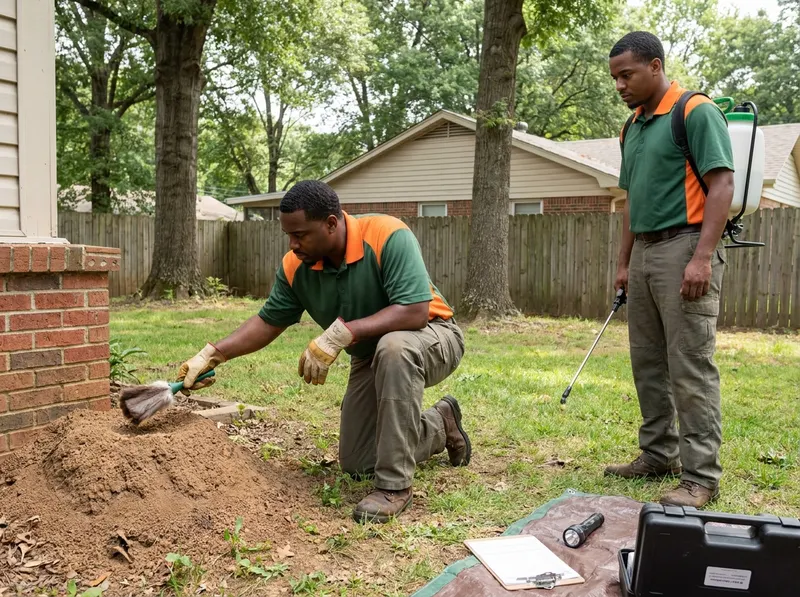
Surface spraying for foraging ants frequently exacerbates structural infestations across older Shelby County architecture. Contact insecticides kill visible worker trails within minutes, yet this sudden chemical disturbance alerts subterranean queens, prompting a physiological defense response known as colony budding. During budding, single colonies fracture into multiple decentralized nests, compounding interior kitchen and bathroom activity. Long-term colony elimination relies on non-repellent transfer matrices containing active ingredients registered by the EPA Pesticides program. Worker ants unwittingly transport these slow-acting agents directly into structural framing and sub-slab voids, feeding brood workers and reproductive females over a 14-day cycle until total nest mortality is achieved.
Memphis exhibits distinct regional microclimates governed by the Wolf River basin, heavy subtropical summer humidity, and annual rainfall exceeding 53 inches as tracked by the National Weather Service Memphis Office. These specific moisture conditions cause widespread carpenter ant excavations inside damp crawl spaces across historic raised-foundation homes in Midtown, Cooper-Young, and Central Gardens. Meanwhile, sprawling slab foundations in Cordova, Southwind, and East Memphis frequently contend with invasive Argentine and odorous house ant supercolonies nesting beneath concrete patios, driveways, and expansive mulch beds. Species identification guided by the University of Kentucky Department of Entomology enables exact bait matrix calibration, balancing lipid, carbohydrate, and protein carriers against seasonal reproductive phases to secure rapid ingestion.
Eradication strategies demand environmental mechanical corrections alongside targeted liquid perimeters. Decaying tree canopies near residential rooflines in Berclair and Binghampton provide aerial bridge points that bypass standard ground-level chemical barriers. The Tennessee Department of Agriculture oversees commercial pesticide regulations, ensuring residential barrier treatments preserve non-target aquatic organisms in regional tributaries. Homeowners can reinforce exterior defenses by maintaining a 6-inch vertical clearance between soil beds and exterior brick veneer, eliminating ground-to-wood contact points monitored by structural standards from the U.S. Department of Housing and Urban Development. Structural moisture accumulation should also be audited following standards from the Institute of Inspection Cleaning and Restoration Certification to eliminate the damp timber conditions that sustain wood-boring insects.
Comprehensive structural remediation balances chemical perimeter saturation against targeted indoor crack-and-crevice bait placements without requiring multi-year recurring binding agreements. Standard protocols outline clear numbered stages: 1. Complete acoustic and infrared thermal scanning locates concealed moisture galleries within wall cavities and plumbing chases. 2. Field technicians identify ant species to determine seasonal nutritional demands according to Pest Control Technology guidelines. 3. Slow-acting microencapsulated formulations applied to foundational perimeters conform to OSHA safety standards to ensure non-target protection. 4. Interior gel placements establish deep void penetration inside concealed plumbing penetrations. 5. Follow-up diagnostic audits at 21 days confirm the cessation of brood activity, satisfying home inspection standards established by the American Society of Home Inspectors. Structural safety parameters and pet re-entry timelines align with toxicological safety guidance compiled by the National Pesticide Information Center.
Every job gets a firm, written price after a free on-site visit.
Tell us about your ant colony elimination job in Memphis and we'll send a clear, written quote, usually the same day.
 ForestQuill Exterminators